printmaking
ETCHINGS AND RELIEF BASED PRINTS
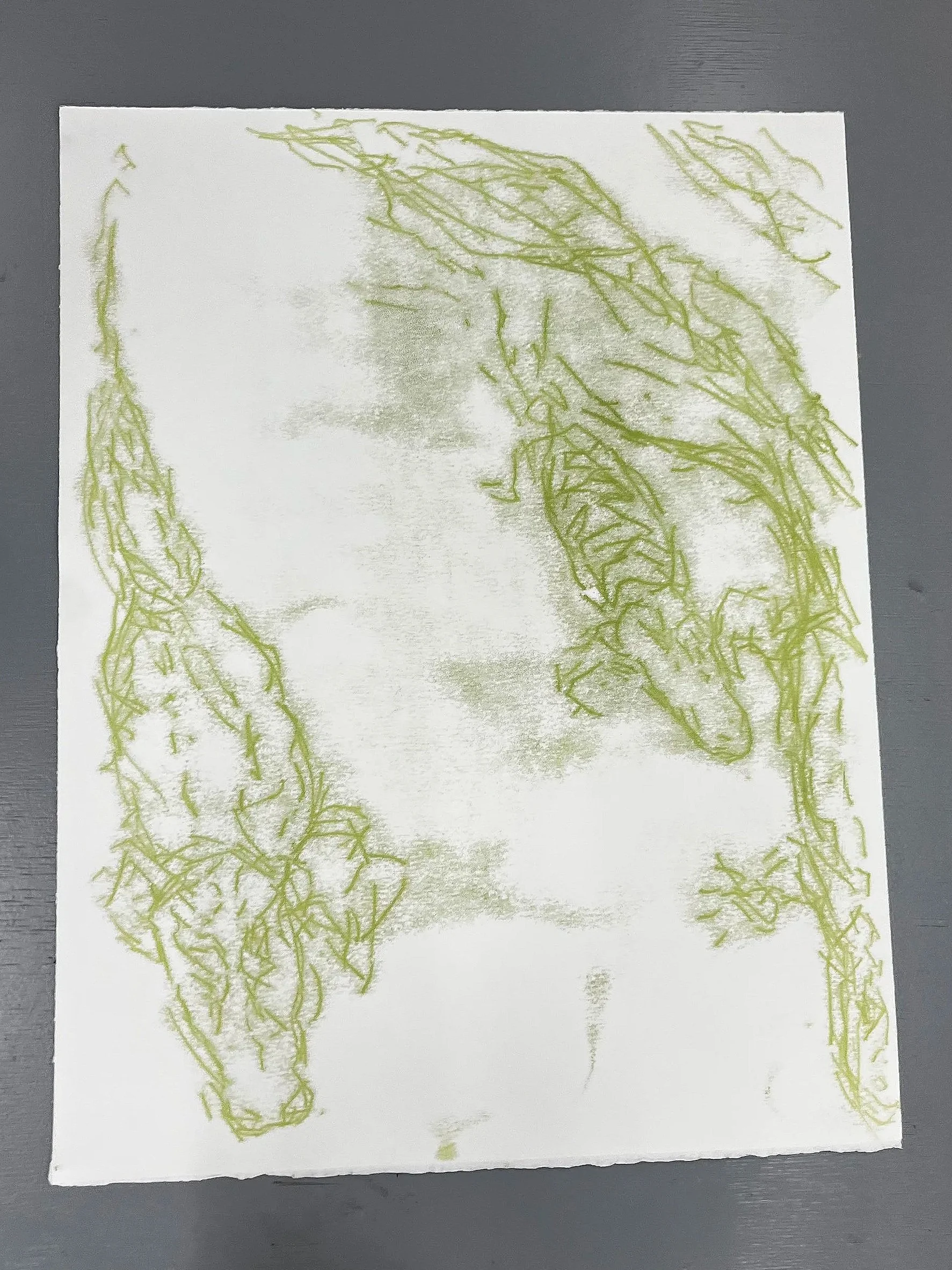
I never meant to declare an art major, but printmaking enticed me in my second year, and I was hooked.
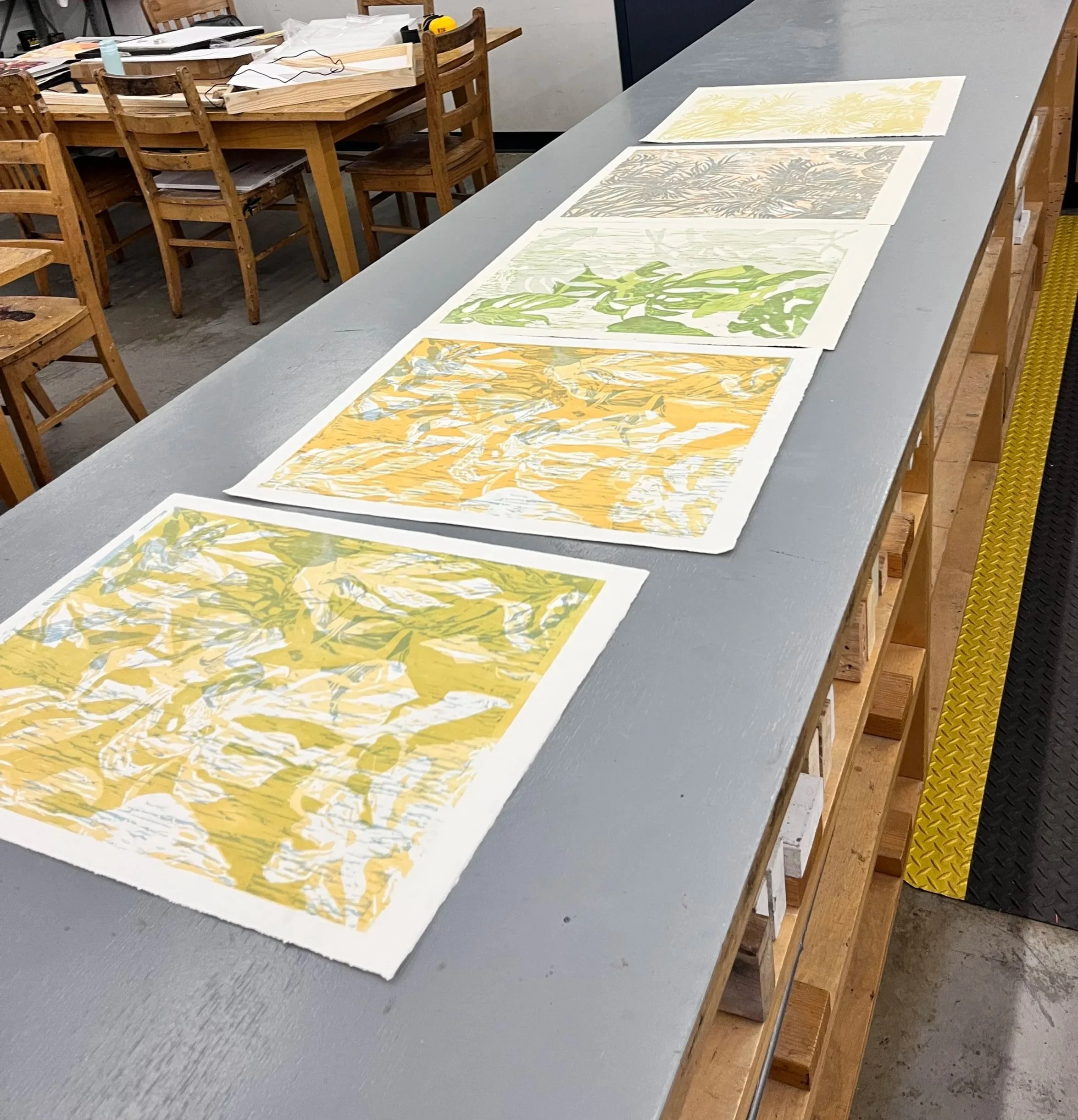
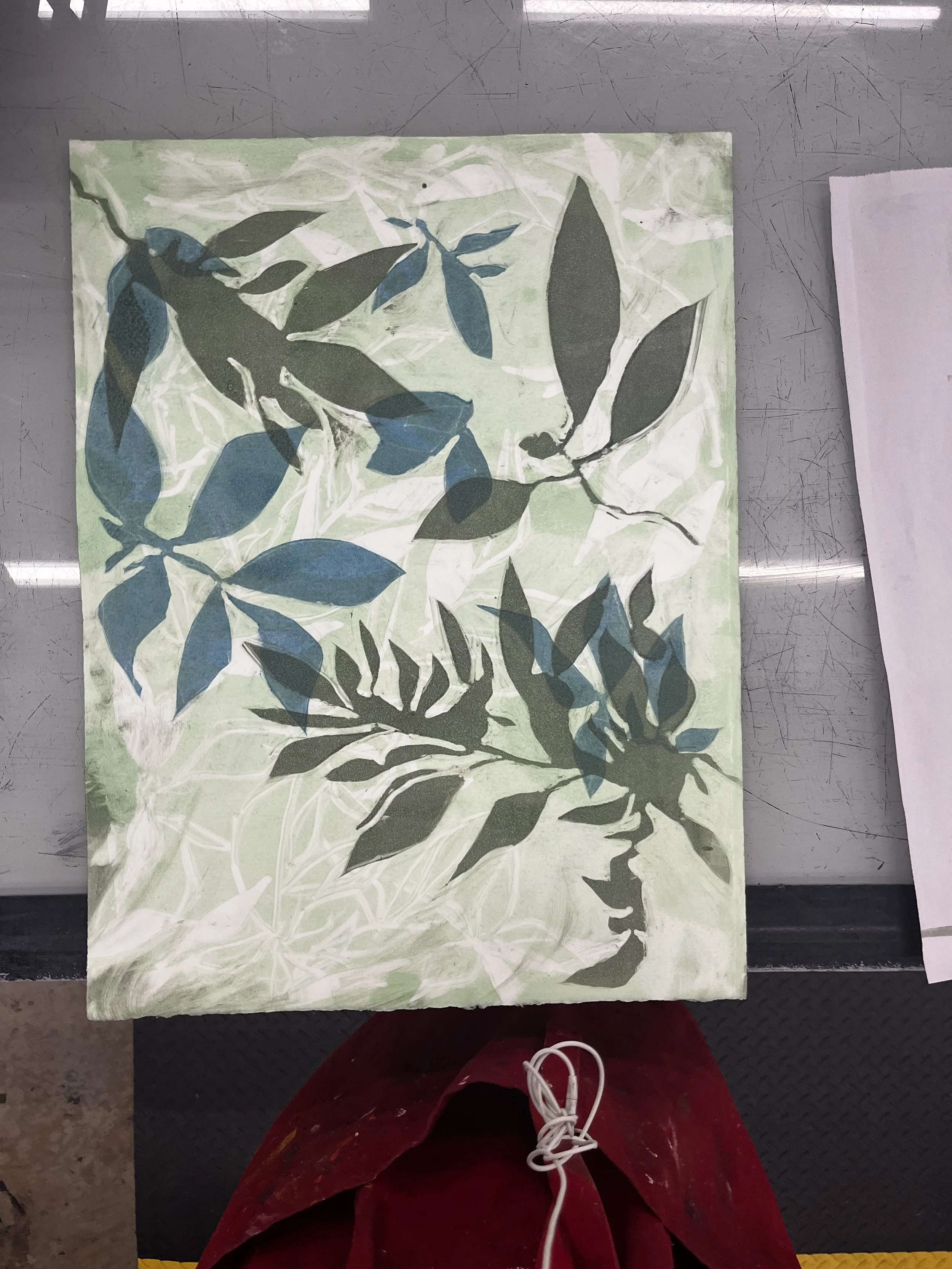
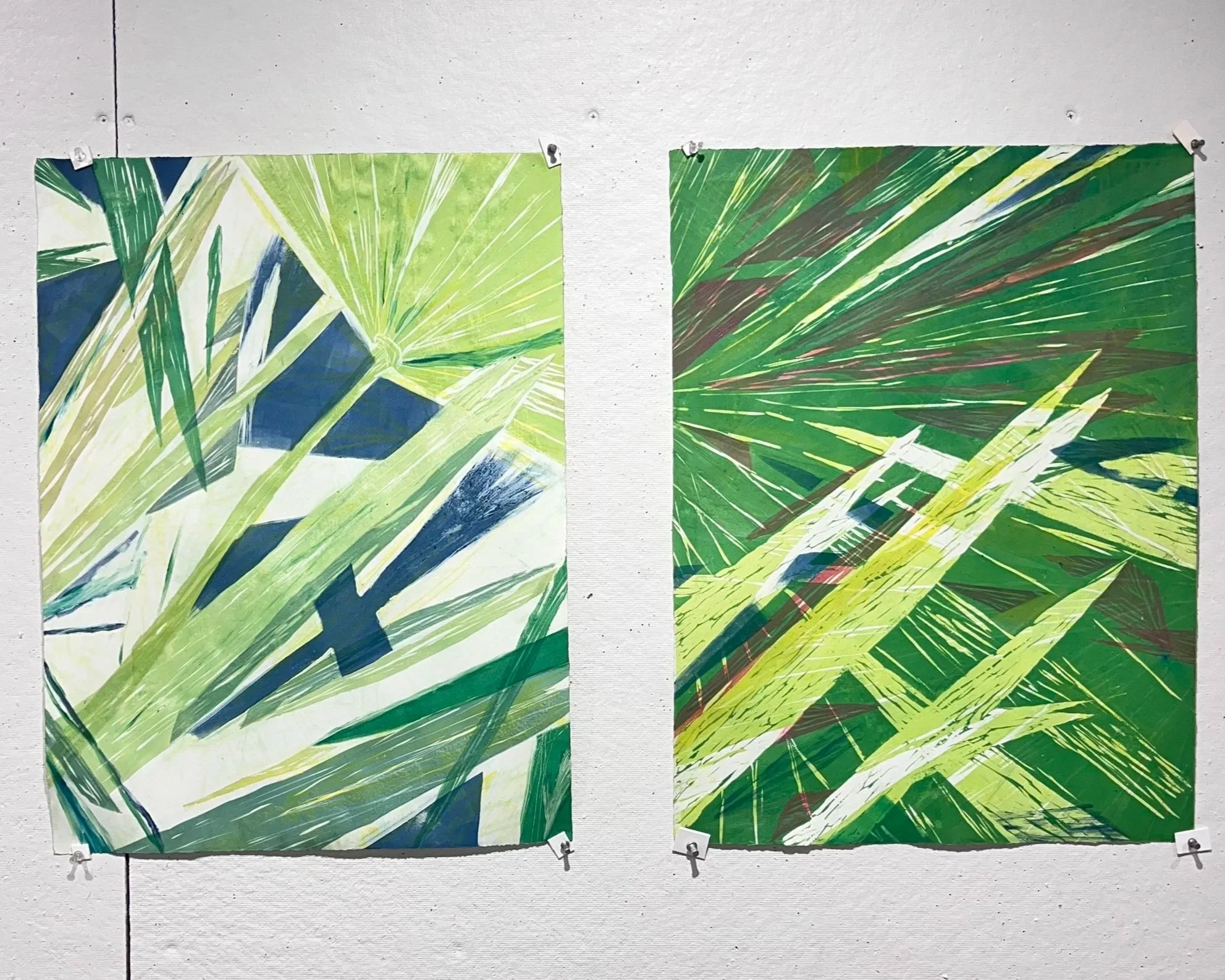
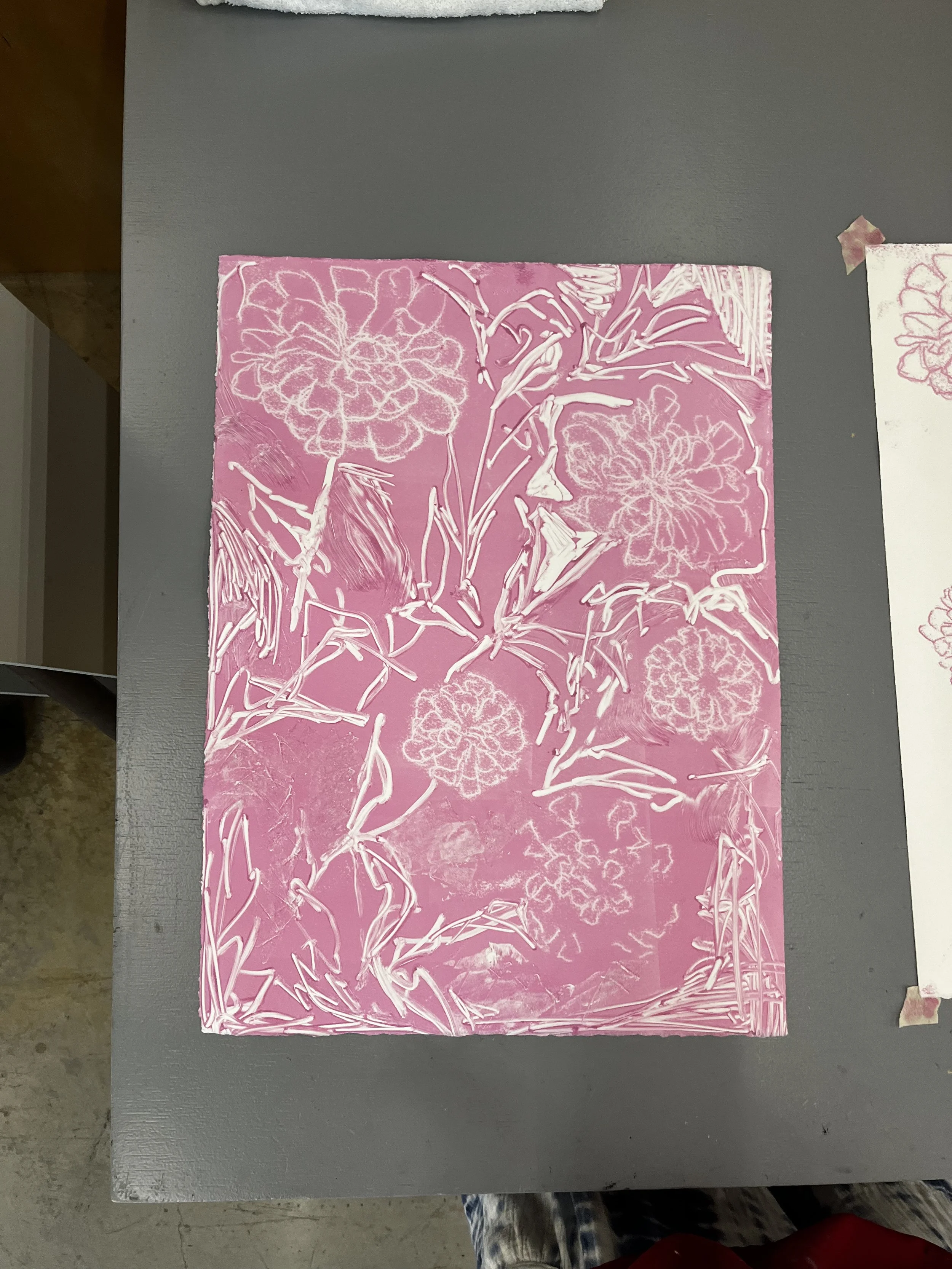
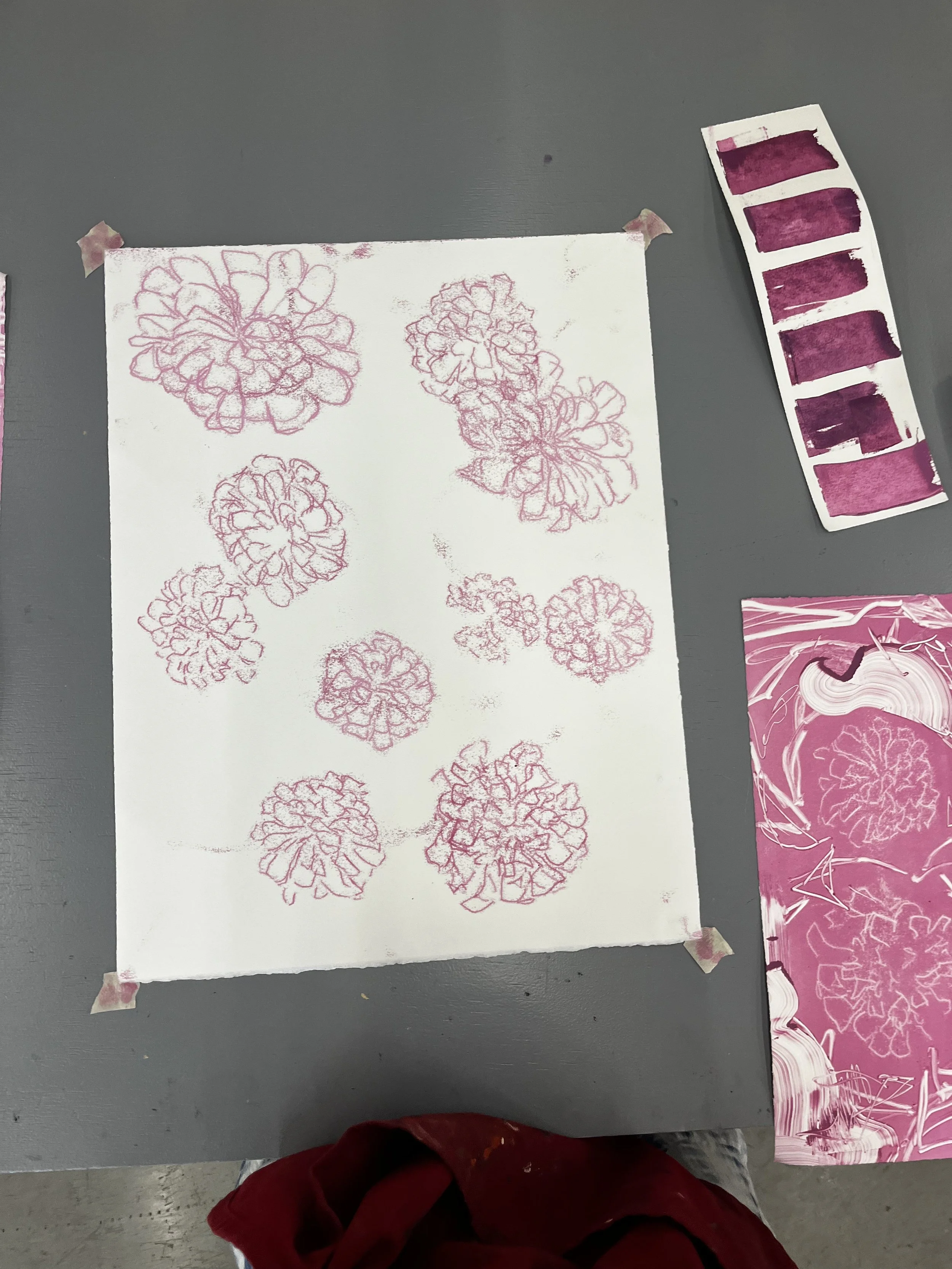
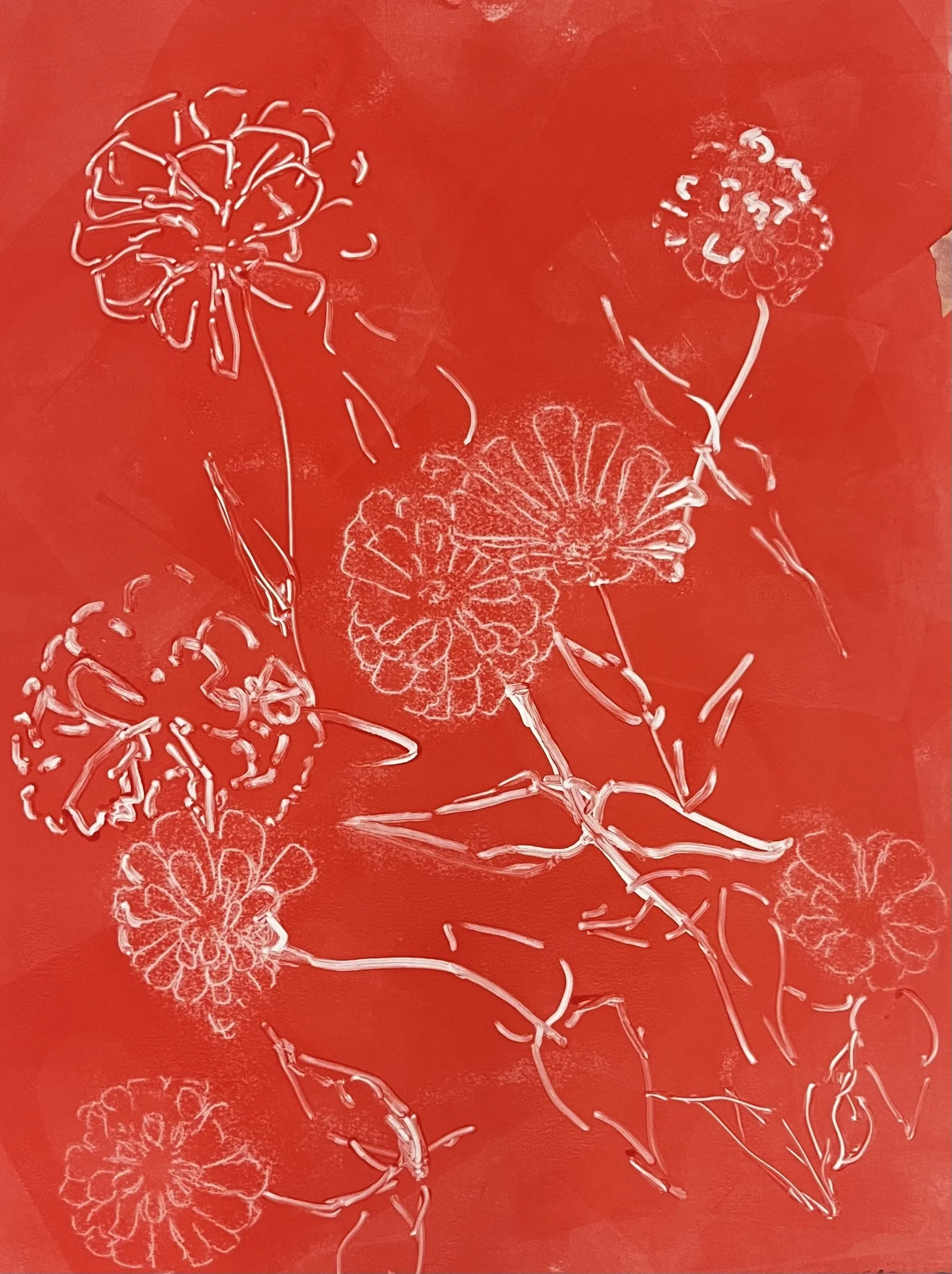
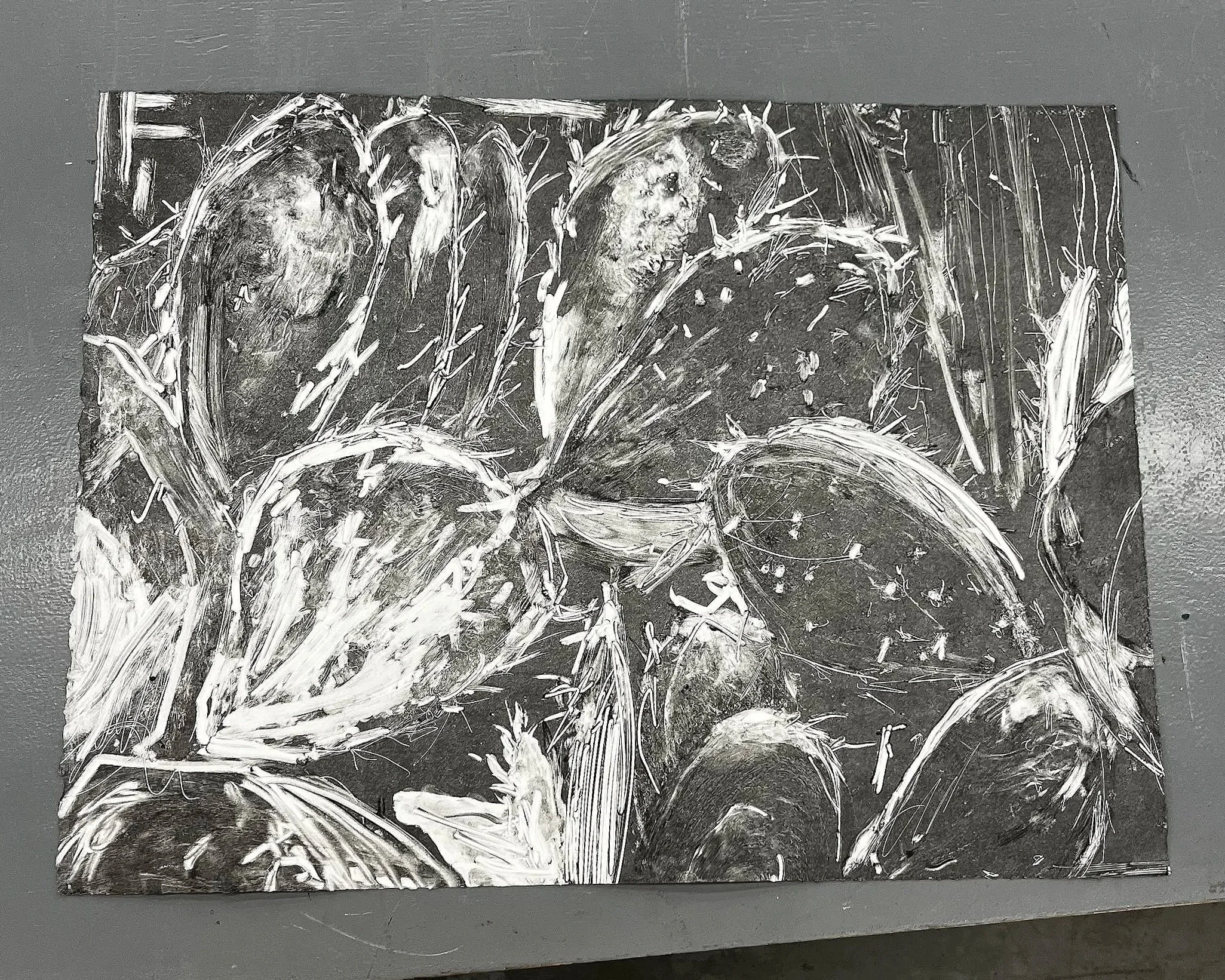
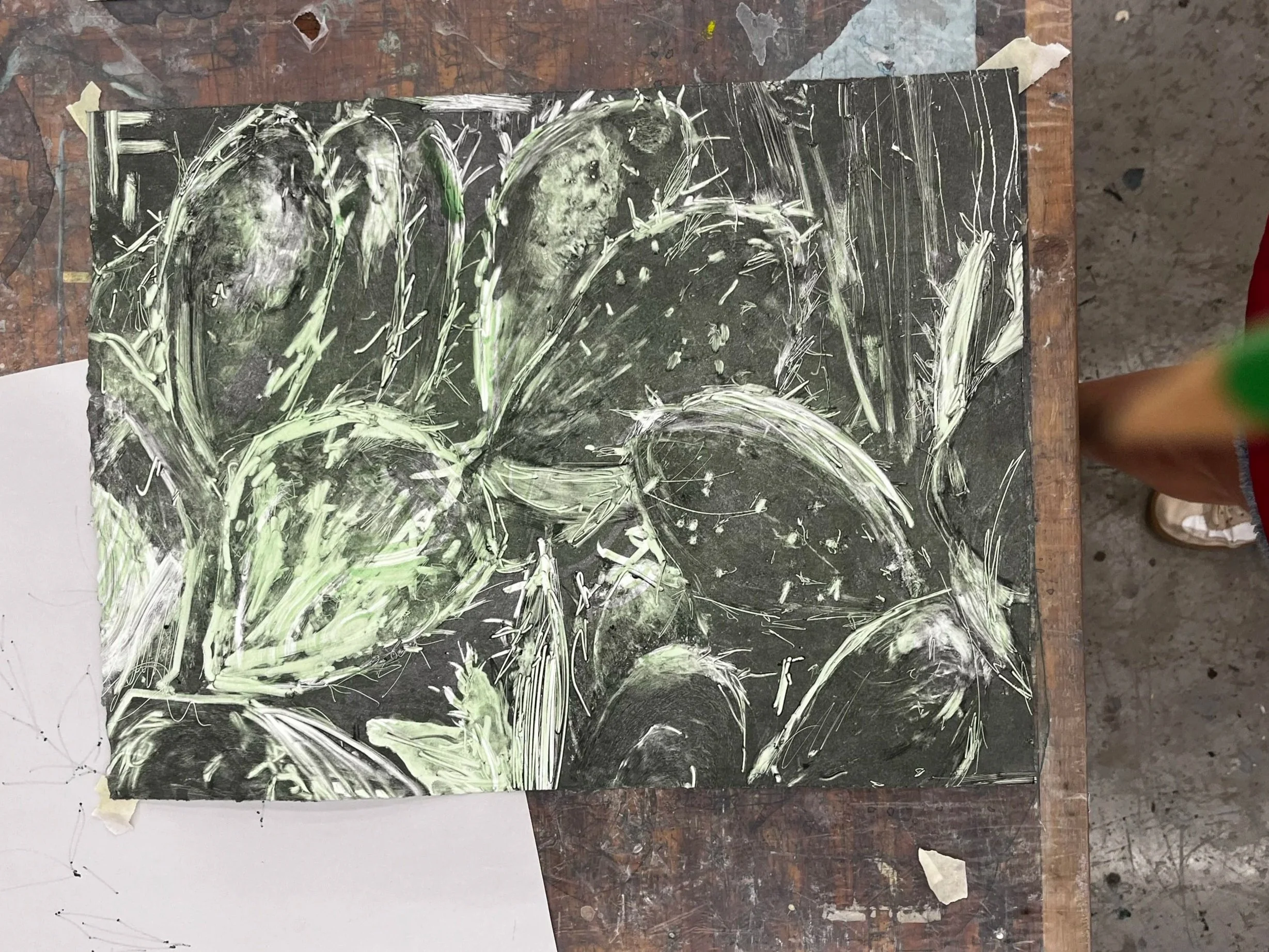
Printmaking often seems to play second fiddle to painting, drawing, and classical sculpture in the “art world” in terms of notoriety, yet it offers such a wide range of techniques, impressions, impacts, and textures. In fact, you’ve probably seen more prints than you know if you’ve ever been in an art museum. It’s both very old and very young, dating back to Han Dynasty-era China and also constantly being iterated upon. Many modern and post-modern artists drafted through iterations of etchings, and lithographs provide a dizzying array of layered colors. If you can’t figure out how a piece was made, it may be a print. Tactile, physical, demanding, unpredictable, pressurizing, my experience with studying print at UVA was one of fascination and respect. It helped that our cohort was small, my classmates were brilliant, and our professors really cared for our artistic development. We were not let off the hook easily. We were pushed, challenged, cajoled and directly questioned by instructor and classmate alike. In my fourth year, I would routinely pull 5-6 hour studio sessions to get a project to its next stage, and often stay in the studio for stretches of 10 or 12 hours. It was exhausting and addictive.
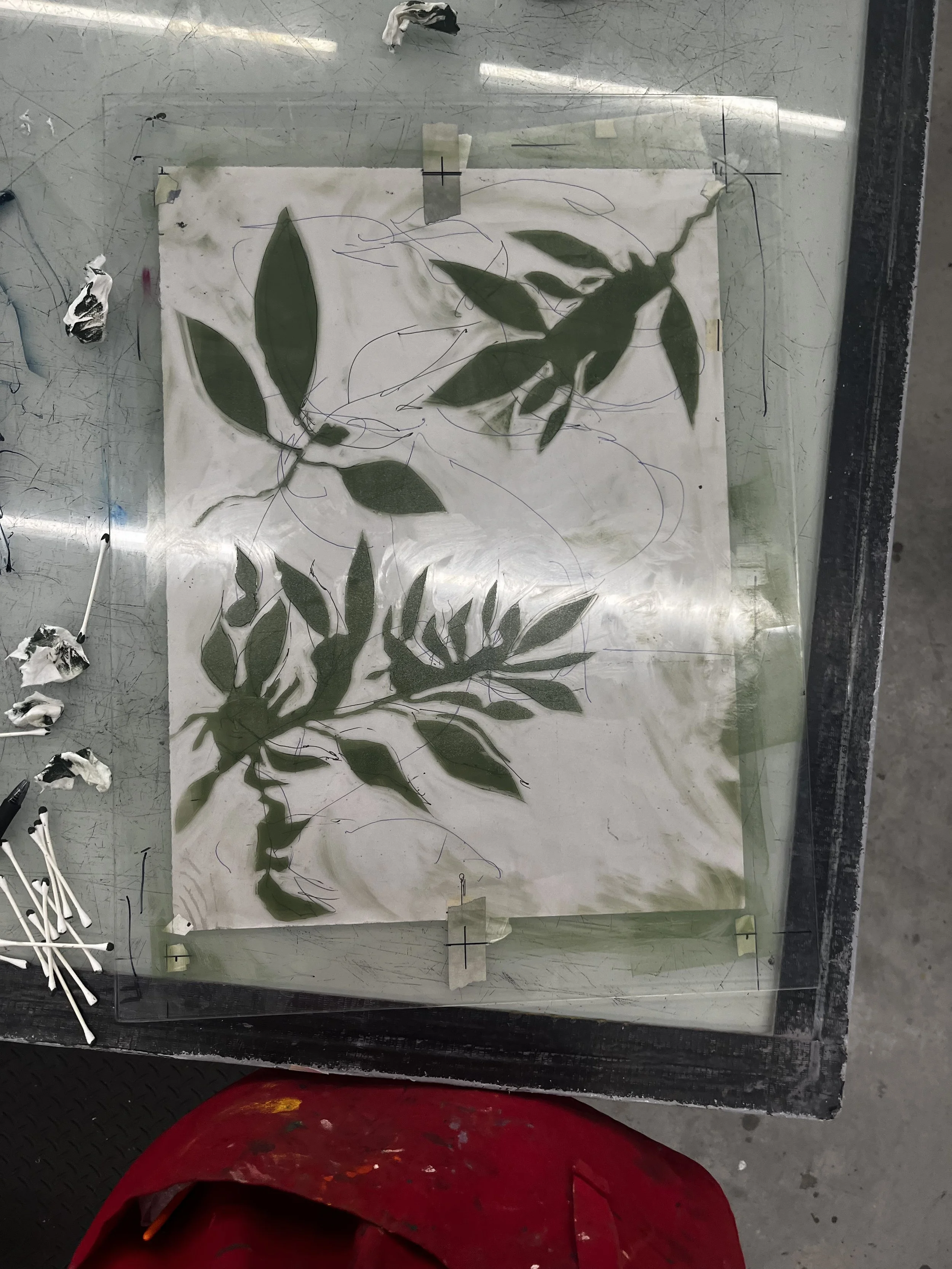
Unlike the control an artist can display while painting or drawing directly on a surface, printmaking asks you to trust, to accept the random whims of the print process as your partners and the arbiters of great work. Let’s walk through a printmaking process. Work begins with a “matrix”, or worksurface, of aluminum or limestone or wood (though maybe you’d prefer steel, linoleum, plexiglass, or zinc), then carve or draw or etch into it, knowing every mark is leaving a history. Throw it in some acid or under some tar or file it with an iron blade, hack at it a bit or cover it in lace. Do you see how many steps are already there?
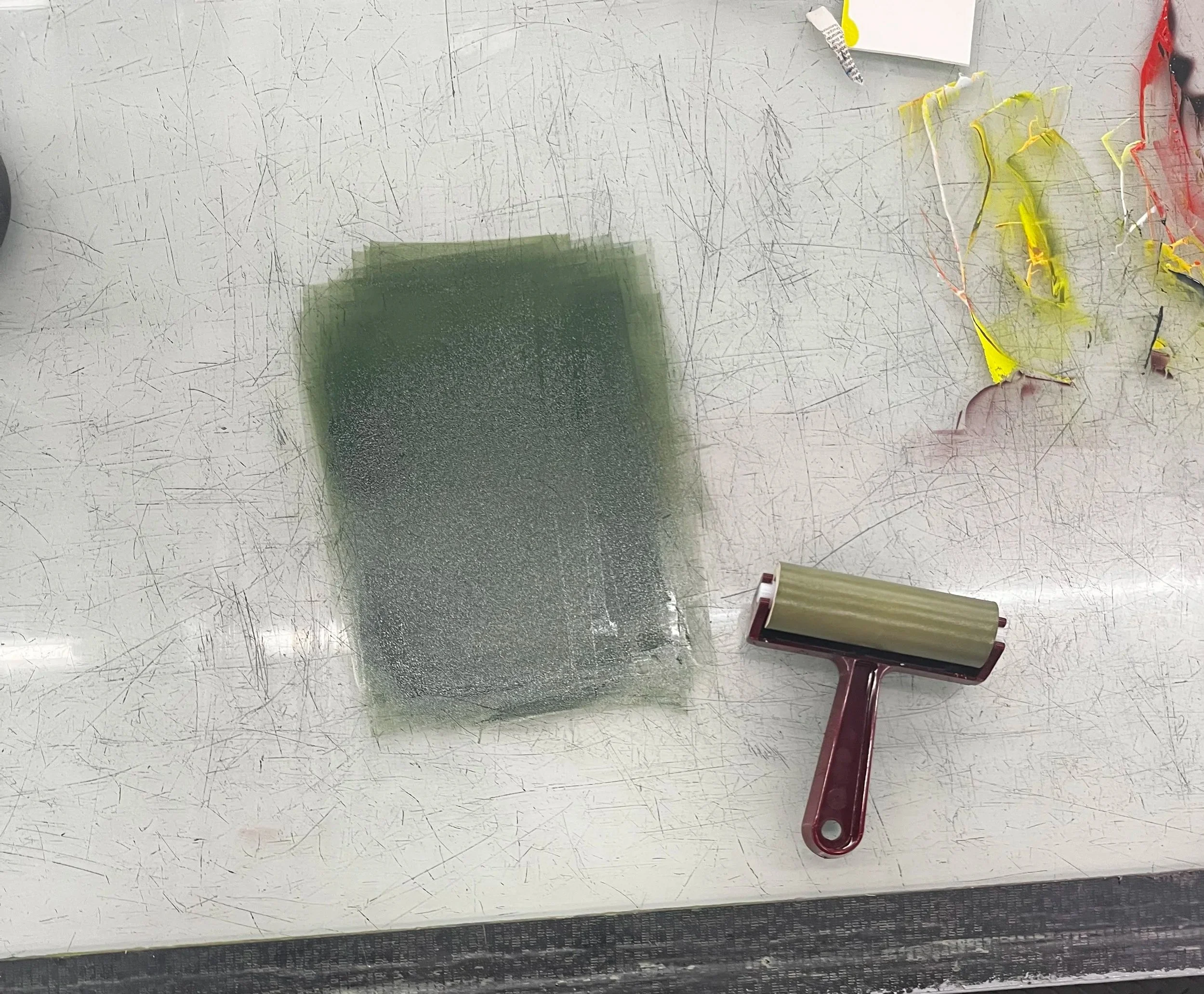
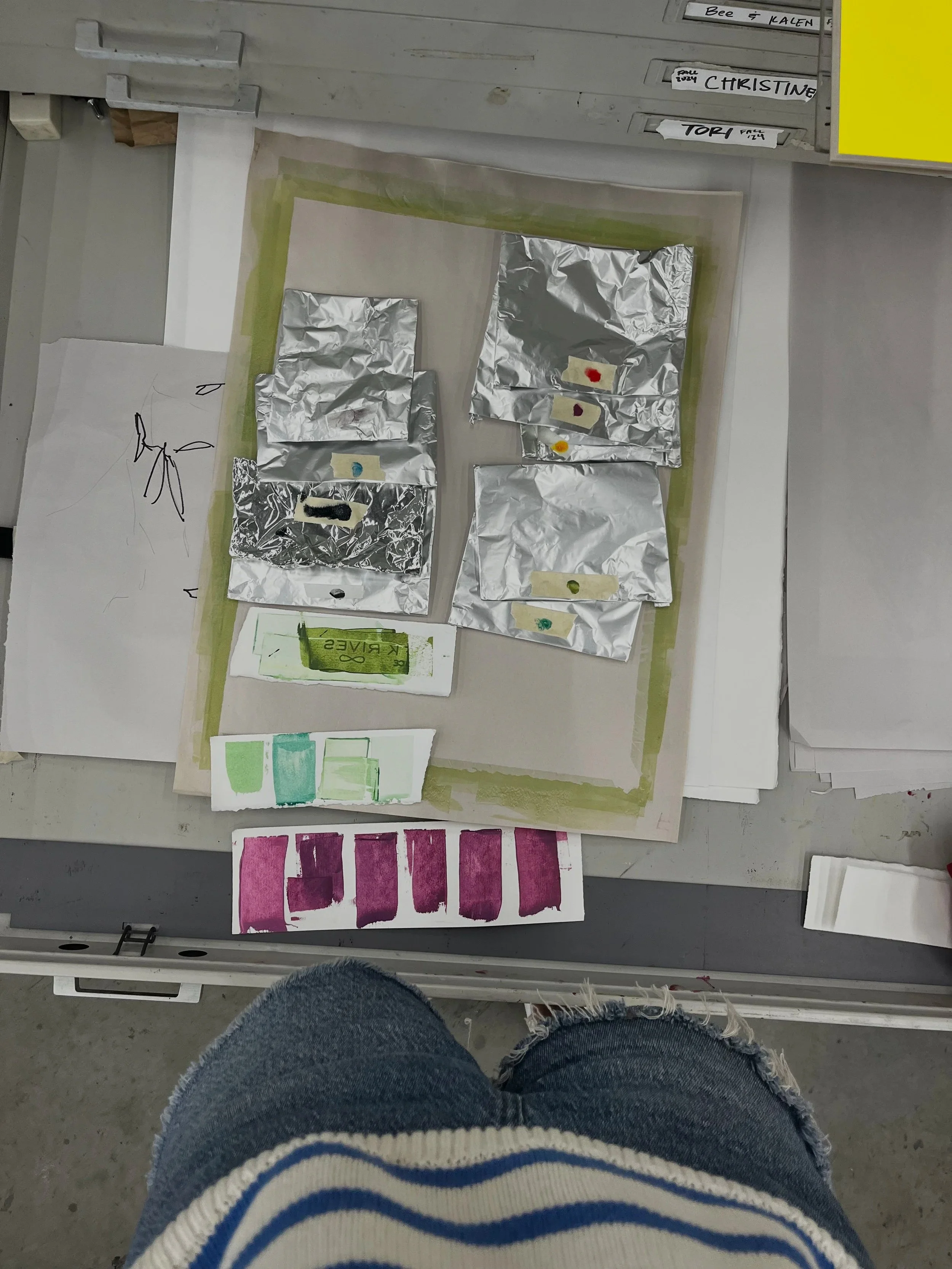
Once your image is complete, roll it up with ink mixed with medium or stabiliser, buff it with cheesecloth and newspaper scraps. Register precisely a sheet of too-expensive paper, torn from the full and measured to the millimeter with shaky hands.
After hours and hours of preparation, the production begins all at once with felts and backers layered atop your matrix and paper. Already the magic is happening, because a print is a touch, and the print is set in motion the moment the two sides meet. Suddenly the production crescendoes as the press sends 200 metric lbs of pressure down through its barrels, the big wheel turning and feeding it through. Your print emerges on the other side. Declare your hard earned wisdom. “I can get better at predicting the print, but I can never entirely predict what will emerge.” In this moment before the result, the print is in a quantum superposition of sorts, halfway between already made and not yet done. It can’t live there, though, so you must lift and see the product.
Reach out with any questions, or check out the “Print Run 101” highlight on my instagram page.